
Soft Goods, Explained
From concept to golden sample
Soft goods design works best through three core iterative phases—Concept, Prototyping, and Tech Pack—each testing different functional use cases and revealing gaps that drawings alone cannot. Most projects fail because teams follow an overly rigid waterfall approach, moving linearly through each phase without feedback loops, which locks in mistakes early and balloons costs. My process builds iteration *into* each phase, maximizing your budget while minimizing risk. Factories require deep skill in soft goods development to interpret your tech pack and deliver a golden sample that matches your vision. Understanding this agile timeline helps you avoid the costly mistakes that derail soft goods projects and partner with factories equipped to handle the complexity.
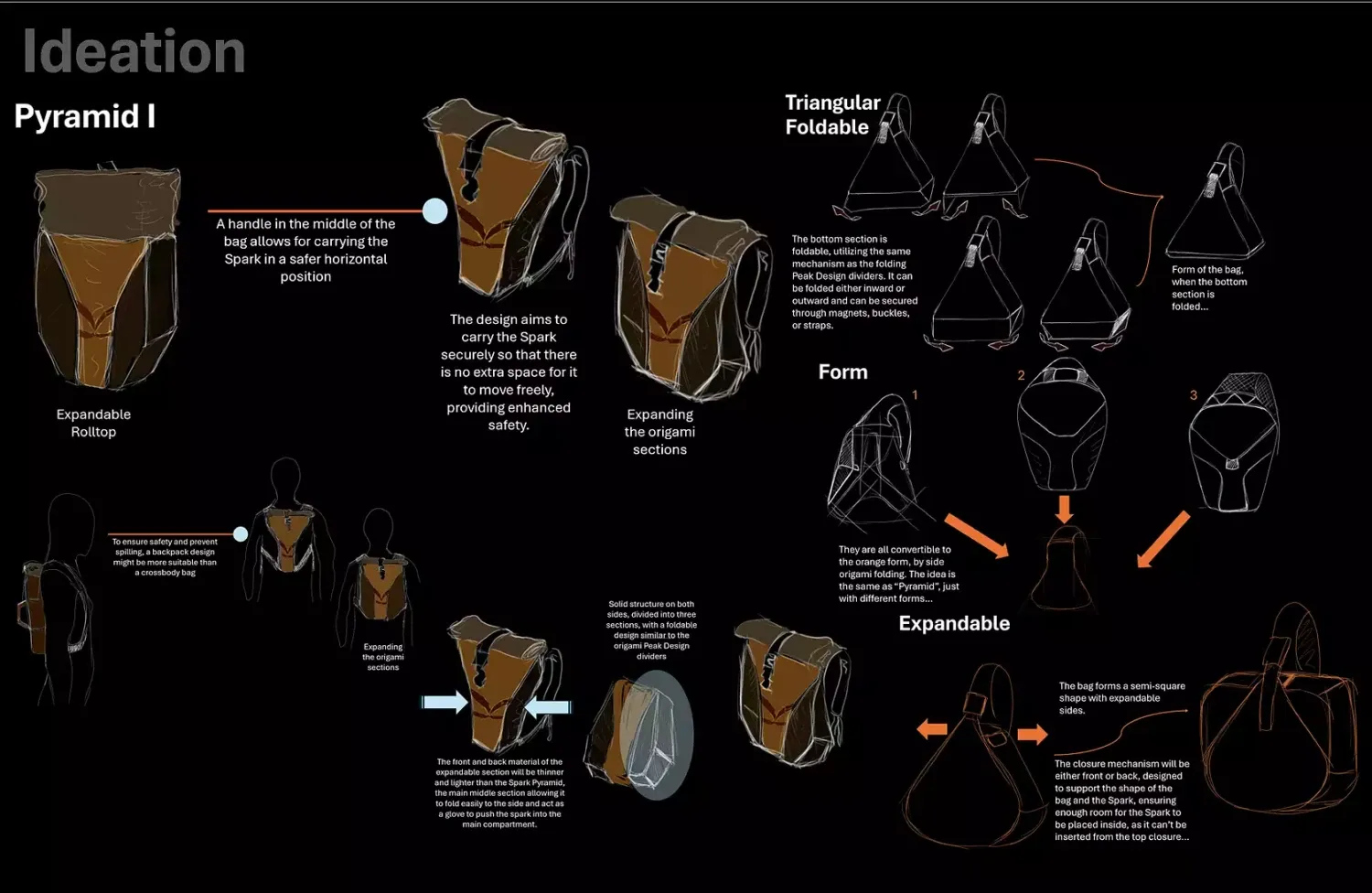
Concept. We define who it's for and what it carries or does. Nothing gets built until that is clear.